Get a Shed! And 7 More Ways to Make the Most of the Long Weekend

Get your bike in order, plant tomato seedlings and make plans for a game night or a grad party

Take advantage of milder weather and longer days to get out in the garden, invite friends over for a casual game night and firm up summer plans. And with Bike to Work Day coming up on May 18, this is a good opportunity to tune up your wheels — and maybe go for a pleasure ride too. Eight could-dos for your weekend are ahead.
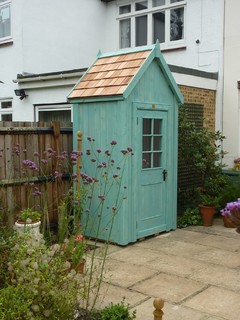

1. Boost backyard storage with a shed. Garden tools last longer and stay in better condition when they’re protected from the elements. If you don’t have enough room in the garage (or don’t have a garage), consider adding a small storage shed or weatherproof container to keep your tools neat and tidy.

You can purchase an off-the-shelf shed kit from a home improvement store. Or hire an architect to design a custom shed that blends beautifully with your home and landscape.

Even a tiny shed can hold a surprising amount — outfit yours inside with wall hooks or a pegboard for hanging tools, and shelves for loose items such as bags of soil. Storage space already all set up? Use your time this weekend to organize it.
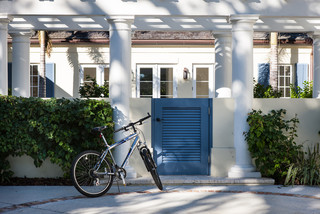

2. Tune up bikes. Bike to Work Day is May 18. Take part by leaving the car at home for the day and commuting via two-wheeler instead. Work too far away to bike? Embrace the spirit of the day by taking public transportation or carpooling if possible (to spare the air), and give your bike some love on the weekend with a tune up and a ride down a local bike path.
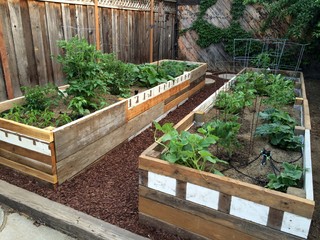

3. Check your irrigation system. If you use a drip irrigation system, May is a good time to check that it’s working properly — otherwise, wilting plants might be your first clue that something is amiss. Turn on the system and check that the tubing is in place and emitters are working properly. If an emitter is clogged, clean it out with a thin piece of wire. If that doesn’t work, replace it.

Thinking of adding a drip irrigation system? It’s a doable DIY project, but plan on a day or two of work to set it up. You’ll also need some basic parts, which can be found here or at a local home improvement store.
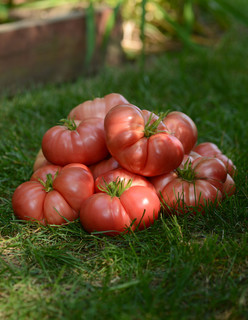

4. Plant tomato seedlings. Check your local nursery for tomato starts — there should be a good selection at this time of year, including heirlooms and unusual varieties. Wait until all danger of frost has passed and the soil has warmed before planting. Tomatoes love full sun and rich, well-drained, neutral or slightly acidic soil.

When you’re ready to plant, remove the bottom two sets of leaves from each transplant. Dig a hole deep enough to cover the stem up to the bottom of the remaining leaves and add amendments. Set in the plant, add soil and firm the plant in place. Leave 2 to 3 feet between plants if they will be staked or in cages; 3 to 4 feet otherwise.
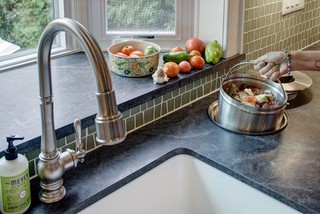

5. Compost kitchen scraps. Backyard composting may seem daunting, but it’s not as hard as it looks — and with farmers market season (and all of those fruit and veggie trimmings) right around the corner, this is a good time to get your compost going. To start making your own “black gold”:
Purchase a composter from a garden store or city disposal station, and place it in a flat, partly sunny outdoor spot with good drainage.
Create a 12-inch base layer of straw, dry leaves or a woody brush material for air circulation.
Add a nitrogen-rich green material (kitchen scraps, lawn clippings) to your composter, always alternating each layer with a layer of carbon-rich organic material (like straw, dry leaves or newsprint).

Every two weeks, mix the contents in the bin to aerate the materials. The pile will shrink over time. Continue to add layers until the bin is almost full.
In about six months, you can harvest the compost.


6. Host a game night. Whether you invite friends over or keep it small, hosting a game night is a low-key, budget-friendly way to catch up after a busy week. Serve simple snacks like popcorn, make it a potluck or go all-out with dinner on the grill.

If you’re inviting people over, ask each person to bring a game. Be sure to go over the rules for each game before you begin — even if it’s a classic game, someone might not know the rules and be too embarrassed to ask. And if you’re expecting a big crowd, set up several games at different tables (the coffee table totally counts) so everyone can play at once.


7. Get ready to celebrate grads. Have friends or family graduating this spring? Carve out some time this weekend to shop for cards and gifts. If you have enough lead time, consider making a special photo book or album — it’s sure to be well received by grads of all ages. Or frame a favorite photo or two for a quicker gift that still has a personal touch.

And if your house will be party central, make a master to-do list so you don’t forget a thing, from the festive drinks to the cake. Shop in advance this weekend for nonperishable items, and you’ll be ahead of the game.


8. Finalize summer plans. We’re peeking over summer’s shoulder now — so if you haven’t nailed down summer plans yet, make it a goal to get it done this weekend. Book a trip, brainstorm ideas for a staycation or simply come up with a list of fun day trips to sprinkle throughout your summer weekends.

And if you will be going away at some point during the summer, remember to book the pet sitter or housesitter and have your mail held at the post office.

All About Screen Doors


Here’s everything you need to know about selecting, installing, and maintaining this summertime essential.

Breezes in, bugs out—functionally speaking, the screen door hasn’t changed much in the past hundred years or so. Different types, however, and their varying price points have emerged in more recent times. If you’re in the market for one to separate your indoor and outdoor spaces, read this before you shop. You’ll find all the guidance needed for selecting and installing a screen door that’s ideal for your house and budget.

Screen Doors vs. Storm Doors
Screen doors are different from storm doors, though the terms are often erroneously used interchangeably. Storm doors, as the name implies, are designed as barriers against inclement weather. Though their frames are rugged (made of steel, vinyl, or aluminum), they may have a screen along with a sliding glass panel to let air pass through at your discretion. Standard screen doors, however, aren’t intended for heavy duty. If you’re looking for protection against the elements, opt for a specialized storm door.

Types of Screen Doors
Three varieties of screen doors exist to supplement the myriad of home entrances.

• Perhaps the most familiar style, one known to go hand-in-hand with a picturesque front porch, the traditional type fits in the outer portion of an exterior doorjamb and opens outwards. Purely functional, bare-bones models are suited to side or backyard entries, yet you can certainly find a stylish one to complement a front door. These traditional screen doors come in standard sizes and are typically made of wood, although aluminum and vinyl versions are available.

• Some homeowners prefer a retractable screen for a front door. Based on the principle of pull-down window blinds, the retractable screen is stored in a spring-loaded casing, positioned either at the side or at the top of the doorframe. You pull it across or down when you want to leave a door open to get a breeze and block bugs. It’s appealing for a front entrance, since it’s all but invisible and won’t interfere with curb appeal.

• Finally, there are slider screen doors that install on the exterior track of a sliding patio door. While some patio doors do come with sliding screens, you can find add-on options for an existing sliding door.

Pick Your Price
You can find a traditional screen door made of unfinished pine for around $30, while low-end vinyl and aluminum models start at around $50. If you’re looking for stainable hardwood or an ornate design, the cost could go as high as $200.

Retractable screens start at around $30 but these cheaper models don’t offer sidetracks, leading you to potentially deal with gaps at the edges. High-end models, running $500 or more, have a variety of bells and whistles, including secure tracks, motorized remote-control operation, and double-door protection for French doors.

Sliding screen panels for patio doors start around $40 and come in standard sizes, but not all sliding doors accept generic screens. Check with the manufacturer of your patio door to determine if you need to order a custom screen, which could run upwards of $100.

Make Sure to Measure
Screen doors come in standard sizes. For a traditional screen door, measure the door you’ll be pairing it with and purchase a screen door in a matching size. If you have an off-size door, consider purchasing the next size larger wooden model and cutting it to fit. Most, but not all, retractable screens require measuring the inside of the doorjamb. Read manufacturer’s measuring instructions (usually posted on the outside of the box) to be sure. For a sliding patio door, measure the door panel that slides and purchase a corresponding screen panel.

Screen Door Installation
Because models vary so, installing a screen door entirely depends on the variety you’ve chosen for your home. Many homeowners are drawn to the traditional screen door for its simplicity, as it requires little more than attaching the hinges and pull-handle with the screws that come included. You’ll need a drill with a bit slightly smaller than the screws, a screwdriver bit, a tape measure, and a pencil for marking where to drill pilot holes. Install the hinges at the same level as the upper and lower door hinges, or about eight inches from the top and also from the bottom. Similarly, the handle should be placed at the same height as the exterior doorknob. Use shims, as needed, under the hinges to center the screen door in the jamb. (It’s standard to leave a 1/8-inch gap around the sides and the top, and a 3/8-inch gap, or larger, at the bottom.)

Most traditional screen doors are universal, meaning you can install them to open on the either the right or the left, depending on your preference. The spring that holds the door closed installs midway on the door, typically behind the push bar, on hooks, so you can remove it when you want to open the door all the way.

Retractable screen installation differs by type and brand, so follow the manufacturer’s instructions. Typically, you’ll use the same tools needed for traditional screen door installation, but if you’re attaching a bottom track to a concrete or brick porch, you’ll also need a masonry bit and concrete screws. Some higher-end retractable screens do require professional installation.

Last but not least, installing a screen door that slides is all about track placement: Position the door in the exterior track and lift it up to hook the rollers in the upper track runner. When it’s in the right spot, it should slide smoothly.

Seal and Secure
Most wooden screen doors come painted, but often the top and bottom edges are raw wood. Sealing the raw edges with exterior paint that matches the door before installation will prevent premature weathering. If you purchase an unfinished door, paint the whole thing with quality exterior paint, or stain it and brush or spray on a coat of spar varnish to keep it looking new. Vinyl and aluminum screen doors require no additional weatherproofing.

If the bottom of the screen door has a large gap, consider installing a door sweep. Available at most any hardware store, this add-on attaches to the bottom of the door to keep out dust and crawly bugs.

After installation, enjoy the easy, breezy nature of your new screen door—and don’t let it hit you on your way out!

Source Article Bob Vila

Dandelions the Snack Food for Bees


Every year at this time there are lots of questions about how to get rid of dandelions and lots of concern about honeybees needing dandelions to survive. Most of the argument is based on emotion on both sides. Proud lawn owners want a nice smooth carpet of lawn. Beekeepers and nature-lovers want plenty of food for the bees and other creatures. The truth, like most things, is somewhere in between. So let’s look at the issues and see what we need to know to make good decisions.

Dandelions: Bee Feed or Pesky Weed?

Common dandelion, Taraxacum officinale, is both native and introduced in the US depending on the subspecies, making dandelions a natural part of many environments in the wilds around us. Honeybees are imports from Europe, Africa, and Asia. At least the European bees would have been familiar with dandelions from thousands of years of interaction. Any sunny spring day in a meadow filled with dandelions will tell you that the bees use them, but a closer look will tell you a lot more. The first thing that I have noticed is that the bees seem to prefer visiting apple and maple trees over the dandelions even though the main bloom time is the same. A little further research on Google Scholar will show that the total protein content for apple and maple pollen is above 20%, indicating they have enough amino acids that the bees could feed off their pollen alone without becoming deficient in amino acids or protein in general.

Not the Best Source of Nutrition, but Still Valuable

Dandelions didn’t have as much information from studies listed on Google Scholar, but what was regularly covered was telling. When dandelion pollen was feed to solitary bees (not honeybees, mind you) larval development was stunted or incomplete. Studies indicated that dandelion pollen was short in essential amino acids (although exact details were not given). I could not find a single study that indicated anything other than dandelions do not have a very good protein and amino acid content. Just because dandelions are not the best protein sources for honeybees does not mean they are not valuable. Most experts feel that honeybees do better when they gather pollen from different sources, much like humans do better when we eat a wide variety of foods. And while we have a pretty good notion of what bees need as far as amino acids and protein go, we don’t know much else of what their nutritional needs are.

A Varied Diet is Most Important

So in the end it really depends on your situation. If you are in an area that provides a lot of diverse forages for your bees, they will likely not miss the dandelions. If you are in an area where food is scarce or where there is not a good variety of species, you would be best to keep the dandelions around. This is especially true if you do not have maples or apples and other high protein fruit trees around. If you are really worried about honeybees and native bees, the best approach is to find ways to provide them with an abundant and varied diet. This planting would also include flowers for different times of the growing season from different plant families. That way the local bees will not have to rely on any one type of flower, and you will have a great color display all season long.